The Kasiṇa Bhāvanā Practice in the Wat Yannawa
Wat Yannawa is one of the oldest temples in Bangkok. It was built during the time of the Ayutthaya Kingdom, early in the 19th century, in 1835, on the banks of the Chao Phraya river in Sathorn district. It has a unique boat-shaped chedi and viharn. The temple was known as Wat Khok Khwai ($%&'()'$*+) or “The Temple of the Buffalo Stable” during the Ayutthaya. The fonder remains unknown. It was designated as a royal temple later during Thonburi period in 1782. In 1844, 161 during the reign of King Rama III, Kromma Muen Kraisorn Vichit, who was titled as the restoration chief of Wat Yan Nawa, renovated the ubosot that King Rama I had previously restored. The King had the boat-like structure built behind the ubosot in 1844, and he also had two monk's houses constructed and decorated with gilded pediment decoration on windows and doors, as was the ubosot’s arched entrance. Interesting architectural construction includes a chedi in the form of the Chinese junk, a structure that replaced Wat Khok Krabue’s old ubosot following King Rama III’s order. This boat-shaped chedi is the only lifesize Chinese viharn in Thailand. Another highlight includes Phra Ubosot, a masterpiece and valuable work of art in Rattanakosin period showing the high level of skills of the royal craftsman during the reign of King Rama I. Portrayed is the figure of a Deva decorated with the pattern of Himmapan creatures. Inside the ubosot, there are 4 different sizes of principle Buddha images all in the attitude of subduing Mārā. There is also a 3-storey Tipitaka Hall represented by a Thai architectural-style building decorating 3 viharas. This place is used for storing the Tipitaka, important Buddhist scriptures and Dharma books. The statue of King Rama III is located in front of the Chinese junk-shaped chedi. 162
The doctrine and practice of kasiṇabhāvanā in the Wat Yannava Temple Meditation Center are based on the texts found in the Tipiṭaka and the commentaries.
It is mainly the four color kasiṇas (green, yellow, red and white) that are developed and used in Wat Yannava. A few times a year, it is also possible to practice other with other objects, such as a fire kasiṇa.
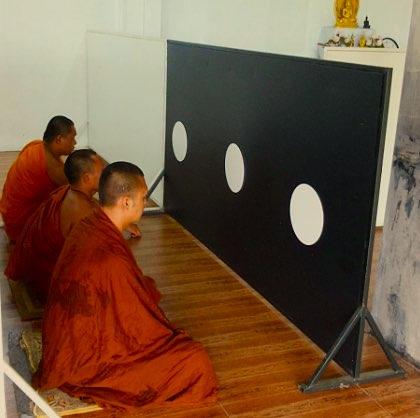
To develop a color kasiṇa, a color kasiṇa device is needed. The background against which the kasiṇa device is placed during the practice must not be cluttered or show visually distracting features and the sitting posture must be comfortable.
Kasiṇa master Dr Charoon teaches the preparation of the earth
kasiṇamandala
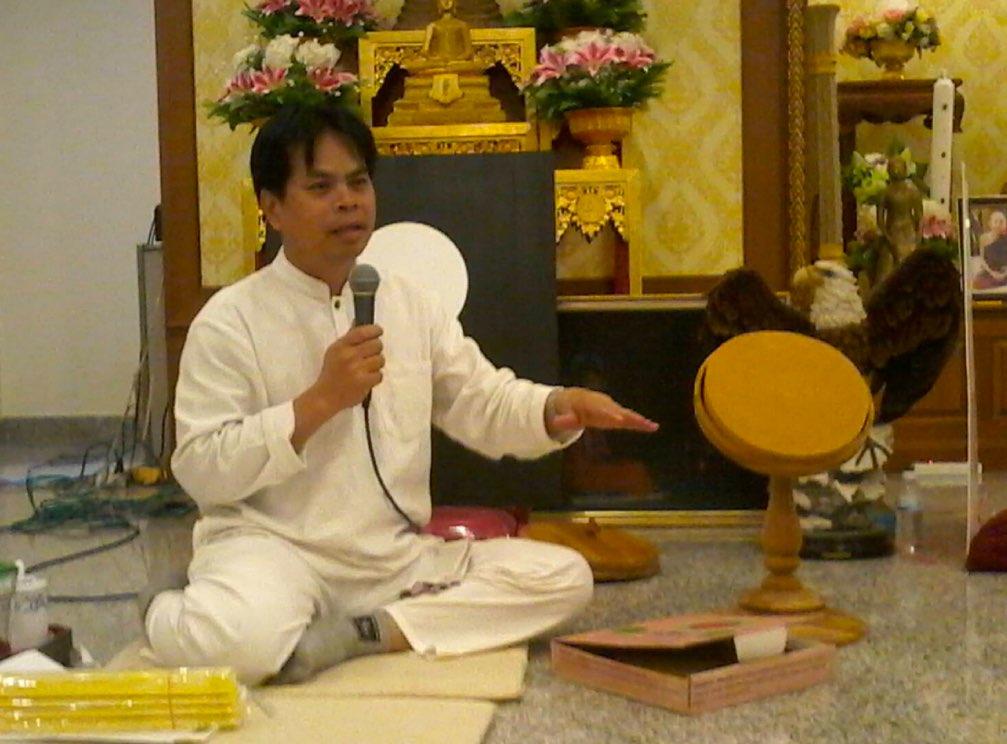
Kasiṇa practice in Wat Yannawa (monks)
Fire kasiṇa (tejo-kasiṇa) and color kasiṇa practice in Wat Yannawa
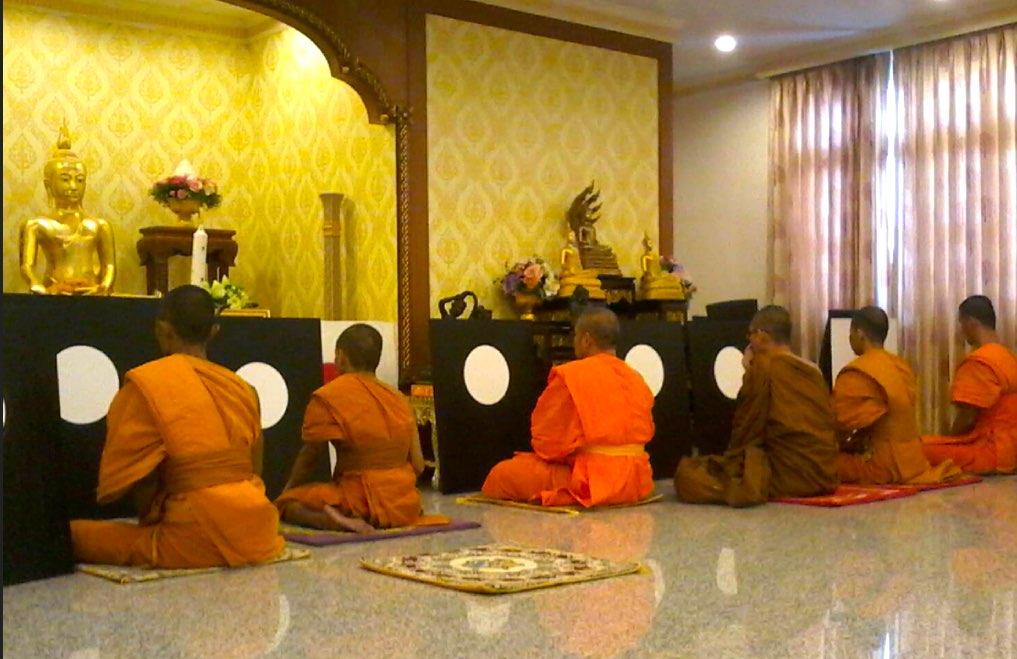
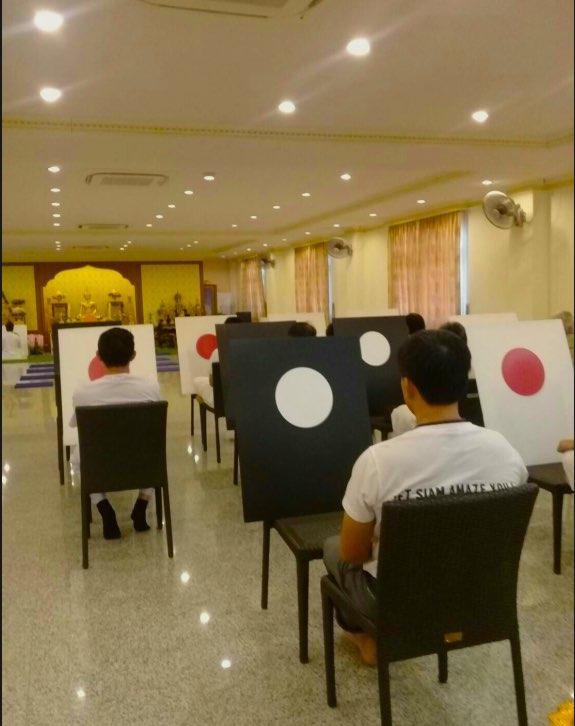
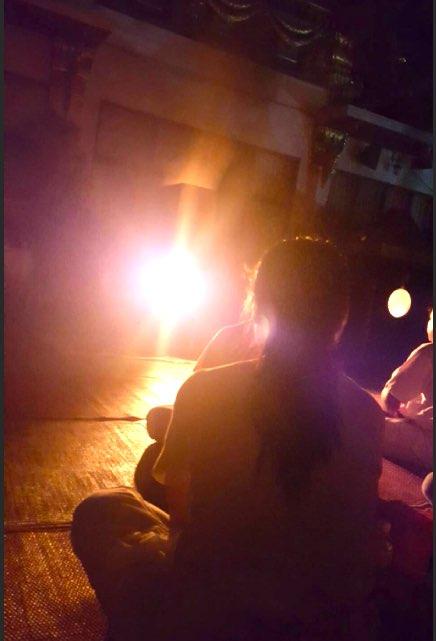
Monks and lay people practicing kasiṇa meditation in Wat Yannawa
Earth kasiṇa (paṭhavī-kasiṇa) practice in Wat Yannawa
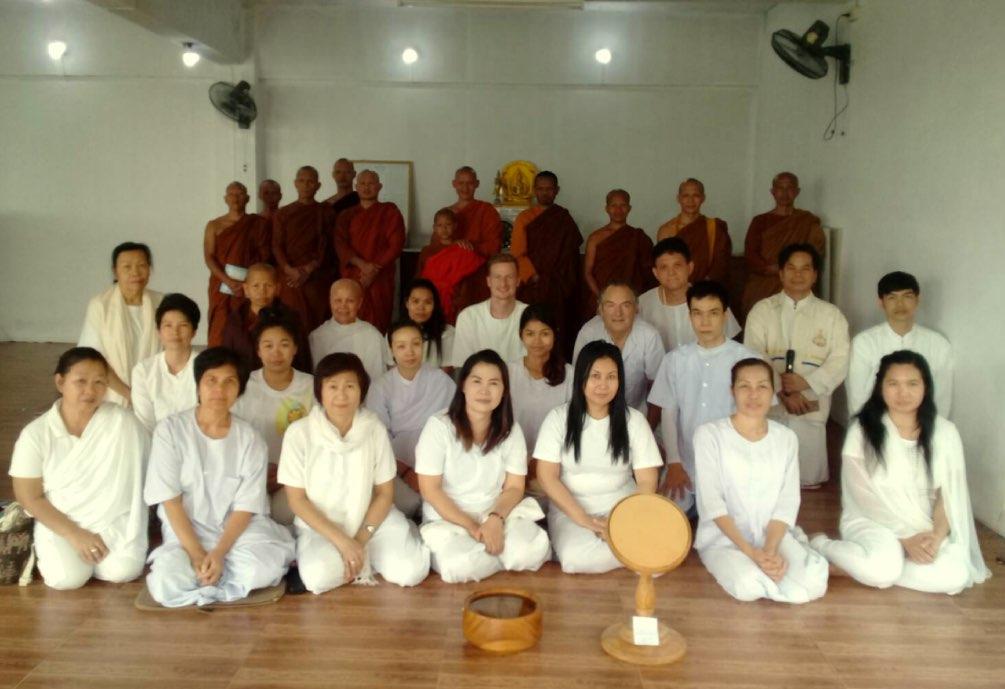
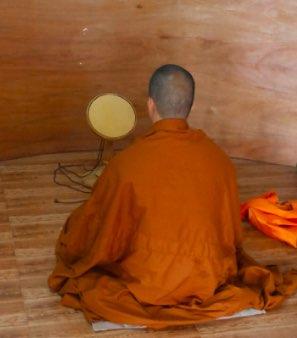
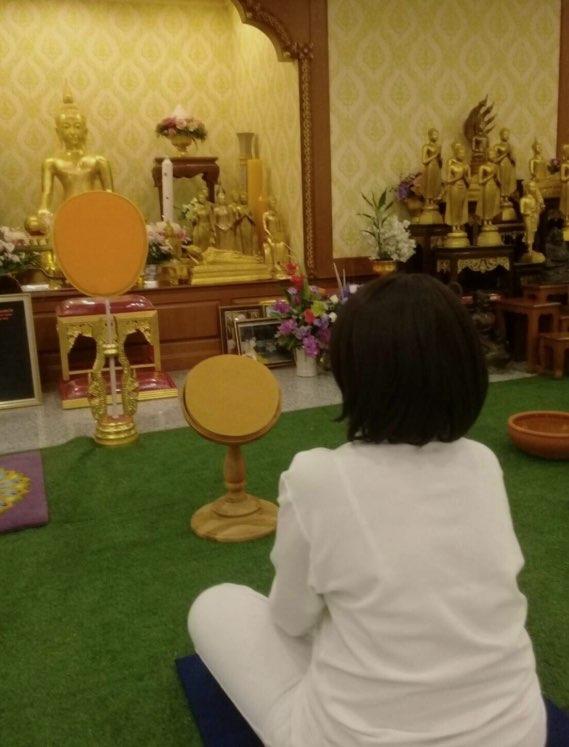
Monks practicing kasiṇa meditation in Wat Yannawa
After the interview with Dr. Charoon Wonnakasinanont, the kasiṇa Master at Wat Yannawa, and after analyzing participant responses and synthesizing key findings, it emerged that the main 4 steps of kasiṇa meditation practice were as follows.
1. Normal practice 2. Accelerated practice 3. Rapid practice 4. Absorbed practice
4.1 Controlling the kasiṇa image 4.2 Enlarging the image 163
Step 1: Normal practice. In the first step, the practitioner gazes at the middle of the kasiṇa device for 15 seconds, then closes their eyes to visualize the image for 5-10 seconds. These steps are practiced over and over. In this way, the practitioner looks at the kasiṇa device for at least 15 minutes or 50 times. At the same time, the practitioner incessantly note the color of the kasiṇa device, like: “white”… “white”… “white”… .
Step 2: Accelerated practice. The second step is quicker than the first. Here the practitioner gazes at the kasiṇa device for 5 seconds and then closes their eyes to visualize for 5 seconds. In this way practitioner looks at the kasiṇa device for 100 times in 15 minutes. Repetition of the noting of the color of the kasiṇa device continues.
The first and second steps are used alternatively. If the practitioner doesn’t rush to open their eyes, and concentrates very well, the disappeared image will appear again many times. If practitioner cannot visualize the kasiṇa image, they must continue gazing at kasiṇa device.
Step 3: Rapid practice. The third step involves gazing at the kasiṇa device briefly, in a time as short as the blinking of an eye, then closing the eyes to figure out the image for 3 seconds. In this phase, the practitioner gazes at the kasiṇa device for 0.5 seconds, then closes the eyes for 2-3 seconds, alternating between the two steps. The third step is used after the aspirant practices the first and second steps for 2-3 months. It is enough to practice this step for 5 minutes, then practice the other steps all together. Repetition of the noting of the color of the kasiṇa device continues.
Step 4: Absorbed practice. In the fourth step, the practitioner continues to gaze at the kasiṇa device for 30 seconds, then closes their eyes until the finish of meditation. If the image does not present, the practitioner should again gaze at the device for 30 seconds, then close their eyes again and try to figure out the image. Repetition of the noting of the color of the kasiṇa device continues.
One suggestion here is to place the kasiṇa device near a window, a door or clear area that lets the sunlight in. Then, gazing at the device for 30 seconds, the practitioner closes their eyes while turning their face towards the window, the door or the clear area so that the light will help to increase the brightness of the image.
4.1 Controlling the kasiṇa image. In this phase the practitioner trains to control the kasiṇa image. After figuring out the clear image of the uggaha-nimitta, they must train to control the image until it changes into the true image, paṭibhāga-nimitta.
There are three methods to train the image as follows: 1. Training to figure out the kasiṇa image (samādhi-nimitta). 2. Training to control the image to change the color (paggaha-
nimitta). 3. Training to observe the change of kasiṇa image (upekkhā-
nimitta).
Each method must be practiced for at least 5-10 minutes until the practitioner stops gazing or changes training methods.
In method 1, training to figure out the kasiṇa image (samādhi-nimitta), the practitioner practices to visualize any color of the kasiṇa image during the concentration. They must make it clear and as thick as possible, and keep it firmly without losing it. This process is samādhi-nimitta. If the image is pale, the practitioner must try to figure it out again and should train in this way until the image is clear and bright before changing to the second method.
Next comes practicing to control the color of the image (paggaha-nimitta). This, the second method, deals with paggaha-nimitta, and is about training to control the clear and bright image and changing into the true color of kasiṇa device. During practice, the practitioner observes the nimitta, and notes, for example, “white”…, “white”…, “ white”…, or any other color, until the image becomes the same color as the device. If the practitioner can hold the internal color of the image or nimitta corresponding to the external color of kasiṇa device, they can continue and move to train in the third method.
The third method, training to observe the change of kasiṇa image (upekkhā-nimitta), involves observation of how the image changes. After the practitioner stops controlling the image, they observe any changes that occur, for example, gradual bursting of the image into pieces, its change of color, or even its total disappearance. When such changes take place, the practitioner tries to figure out the image by the first method again. After that, they need to practice controlling the image by the second method and third alternatively until they finish gazing.
Training to control the kasiṇa image should be done by alternating between the practice of these three methods for a suitable period of time. Training in only one method can result in three unwanted results. Concentrating for too long when doing the first method can make a person lazy. Too much practice of the second method can make the mind tired and distracted and overdoing the third method can make the mind lethargic.
4.2 Enlarging the image. In the next phase, the practitioner trains to increase and decrease the size of the kasiṇa image on every side: at the top, bottom, right and left. To do this, the practitioner should move their eyes in the direction of the 4 sides while closing the eyes, trying to magnify the side of the kasiṇa image at least 10-20 times. He or she should enlargen it from above and then below, and finally from the both sides. The practitioner visualizes the kasiṇa image and moves their eyes in the direction they want to magnify, finally moving the eyes back to the original position of the image.
Besides this process of enlargement, the practitioner can train to move the image within the eyes by moving the image in a circle of their eyesight. Training begins with the gazer’s eye-movement to the margin of eyesight. Then, they should slowly pull the image in a circular motion for several rounds (see picture 9), moving it clockwise then anti-clockwise until they stop practicing.
This method helps to give power to the concentration and the image will last a very long time. Training for holding the kasiṇa image for long periods helps to strengthen practitioners’ concentration. Practitioners who want to succeed must train themselves as stated above.
Eye-movement illustration
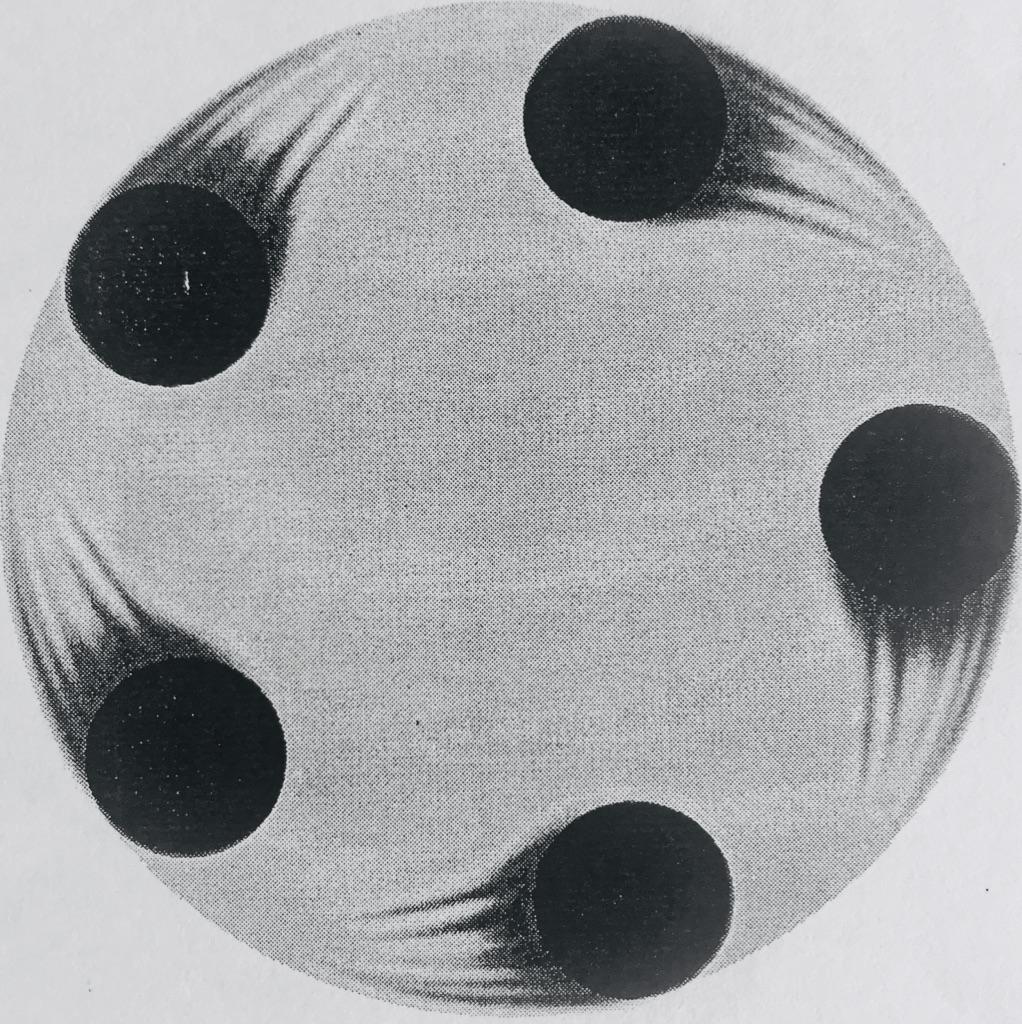
When the first expanded nimitta has become stable, a practitioner should repeat the process, that is, determine to expand it by a few inches. This way can be used to expand the nimitta in stages, until it is one yard in size, then two yards, and so on. Extension need be done in all ten directions around the practitioner until it becomes unlimited, i.e. wherever the practitioner looks, he will see only the color (e.g., white for white kasiṇa). This must be continued till the practitioner sees not even a trace of materiality, whether internal or external.
Next, the practitioner must continue to meditate until they can concentrate on that kasiṇa paṭibhāga-nimitta continuously for one or two hours. Then, the jhāna factors will become very prominent, clear, and strong in their mind, and they will have reached the first jhāna.
Then, the practitioner will develop the five masteries of the first kasiṇa jhāna, and then develop the second, third, and fourth jhānas, and the masteries of them too.
After developing the one color kasiṇa up to the fourth jhāna, a practitioner is also be able to develop the other three color kasiṇas.
A skilled practitioner/yogi can use whatever external objects they see, to develop kasiṇa concentration and use the space kasiṇa and the consciousness kasiṇa to develop vipassanā, be it animate or inanimate, internal or external.
Notes
- Renown Travel Ltd, “Homepage”, January 26, 2019, source: https://www.renown-travel.com/ 161 temples/wat-yannawa.html.
- Tourism in Thailand, “Homepage”, January 27, 2019, source: https://www.tourism 162 thailand.org/Attraction/wat-yan-nawa.
- Interview with Dr. Charoon Wonnakasinanont, kasiṇa meditation Master of Wat Yannava, 12 163 February 2019.
Pole kommentaare, mida kuvada
Pole kommentaare, mida kuvada